This article is part of Food Tank’s primer series, “Food Tank Explains.” Each installment unpacks the ideas, innovations, and challenges shaping today’s food and agriculture systems, offering clear insights into complex topics. To explore more articles in the series, click here.
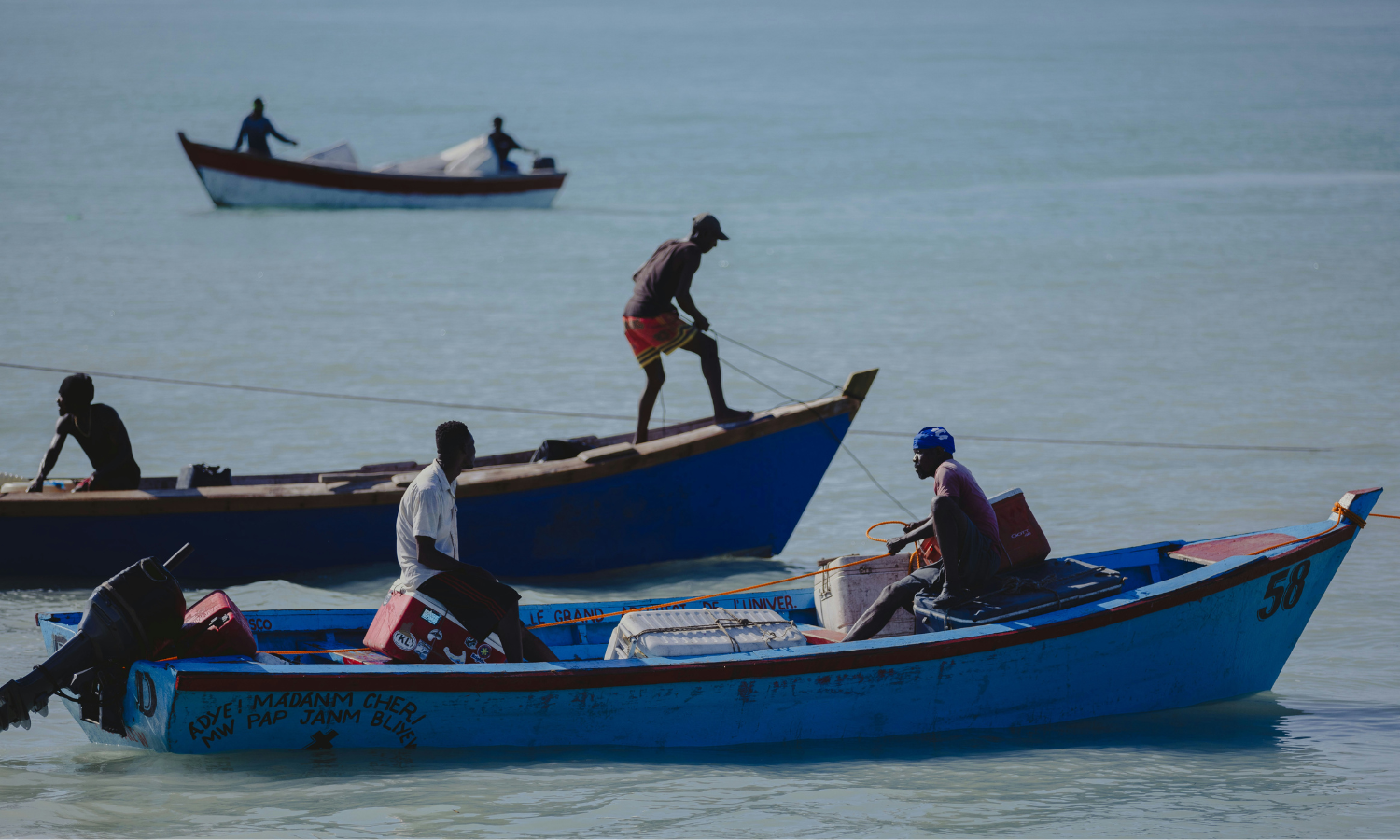
Blue foods are foods harvested from water. They include fish, seafood, and seaweed—wild caught or farmed—and are derived from marine, freshwater, or aquaculture systems. They play an essential role in the livelihood, cultures, and nutrition of millions, and can strengthen global food security and support sustainable food systems.
Dating back over 100,000 years, harvesting blue foods is one of the earliest forms of food gathering. The U.N. Food and Agriculture Organization (FAO) estimates that 800 million people rely on blue foods for income, with wild capture fishing alone employing about 33 million people.
Blue foods are particularly significant to coastal, island, and river communities. In West African coastal nations, fishing supports 7 million livelihoods and generates US$5 billion annually. Pacific islands rely heavily on tuna revenues, which bring in US$7 billion each year. And for the 30 million coastal Indigenous peoples around the world, who eat four times more seafood than the global average, the ocean has sustained their livelihood for thousands of years.
For many aquatic communities, blue foods form a central part of cultural identity, shaping rituals, traditions, and daily life. In Batanes Province, Philippines, where researchers say fishing is far more than just a livelihood, some families relocate during fishing seasons to remain near important fisheries.
Communities in western Korea gather annually for Daedonggut to honor fishers who have died at sea and pray for a bountiful catch. Nigeria’s Argungu Fishing and Cultural Festival and Mali’s Antogo ceremony both center on communal fishing, celebration, and the sharing of harvests.
In Fiji, nearshore seagrass meadows historically enabled the women of Dawasamu to harvest aquatic foods for their community while remaining close to home. “Our food, medicine, and life came and continues to come from the ocean,” says Kii’iljuus Barbara Wilson of the Cumshewa Eagle Clan. “We are Ocean People.”
Aquatic foods provide nutrition to 3.3 billion people, contributing around 90 percent of protein intake in some communities. Many are rich in essential micronutrients—including iron, zinc, calcium, and vitamin A—and fatty acids. These nutrients support cognitive development, cardiovascular health, and immune function, and are linked to reduced rates of stunting, maternal and infant mortality, and heart disease.
They present “huge opportunities for better nutrition and healthier diets,” according to Jim Leape, Co-director of Stanford’s Center for Ocean Solutions, and a board member for the Blue Food Assessment (BFA).
Even small quantities can have a significant nutritional impact, Rosamund Naylor, a member of the BFA’s Science Committee, tells Food Tank. Fish increase micronutrient availability, Naylor explains, increasing the degree to which nutrients from other foods can be absorbed and utilized by the body.
As corporate consolidation reshapes much of the food system, the blue food sector remains largely operated by small-scale producers, providing about 40 percent of the global catch and generating US$77 billion annually. Small-scale fisheries rely heavily on women, who comprise half the sector’s workforce. Women support every stage, playing a crucial but often underdocumented role in harvesting and marketing.
Despite their substantial contribution to livelihoods and nutrition, blue food systems have even greater potential to strengthen global food security and mitigate the food system’s environmental impacts. Global fisheries recently produced 178 million tons of aquatic animals and 36 million tons of algae in one year, a record high. FAO projects that by 2030, those numbers could grow by 15 percent, a massive potential growth in the food supply.
And according to the U.N., most blue food systems provide animal-source protein with relatively low greenhouse gas emissions and impacts on biodiversity. Certain systems, like aquaculture of mussels and clams, can improve their environment.
But researchers and organizations, including the World Bank and the U.N., agree that without stronger governance and sustainable practices, blue foods could shift from an opportunity to an additional source of environmental strain.
Environmental changes threaten over 90 percent of blue food production, and fishing practices are depleting some of the world’s most important ocean stocks. A third of wild seafood populations cannot regenerate quickly enough to meet demand.
Aquatic food systems are also threatened by unsustainable fishing, according to the BFA. And they are rife with unethical practices, says Mark Kaplan, Co-Founder and Partner of the blockchain-based traceability system Wholechain.
“Integrity and supply chain stakeholders are not synonymous,” Kaplan tells Food Tank. “That’s why traceability is so necessary.” He believes that with greater transparency comes improved sustainability.
Integrating blue foods into policymaking alongside land-based foods offers another opportunity to strengthen these systems, blue foods advocates say. “I would like food policymakers to not think twice about including blue foods in food system strategies,” says Naylor. According to Chef and Advocate Andrew Zimmern, “we have to include our blue spaces everywhere that we’re talking about our green spaces.”
Articles like the one you just read are made possible through the generosity of Food Tank members. Can we please count on you to be part of our growing movement? Become a member today by clicking here.
Photo courtesy of Alfredo Abreu Vasquez