
Each week, Food Tank is rounding up a few news stories that inspire excitement, infuriation, or curiosity.
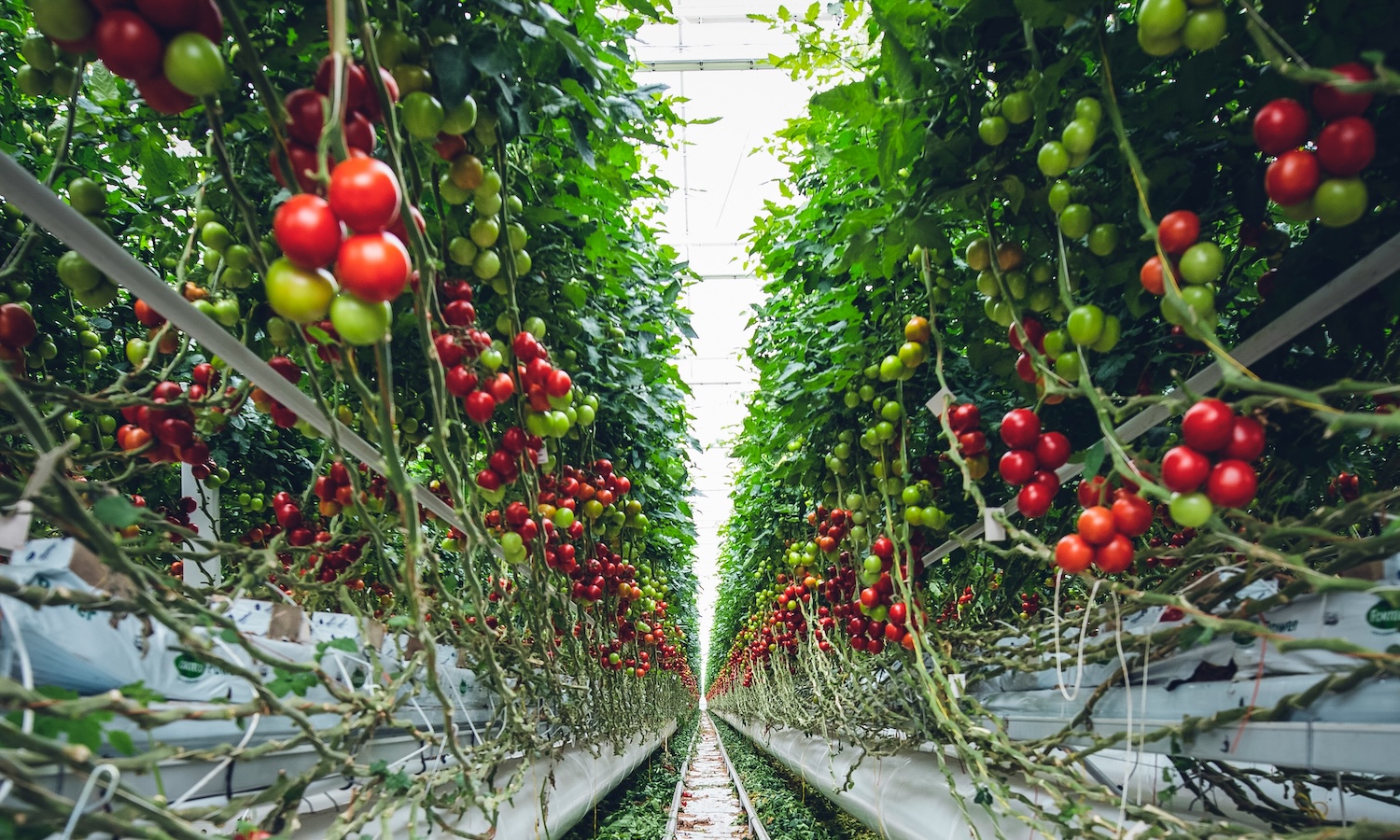
Has the Vertical Farming Bubble Burst?
The New York Times recently reported on the future of vertical farming in the United States.
In December, AeroFarms announced they lost their biggest investor and would be forced to close. And although they received temporary financing and have shared that they have a non-binding letter of intent to sell the company, they still could shut down this month. And both Bowery Farming and AppHarvest, have gone out of business despite raising US$938 million and US$792 million in venture capital funding, respectively.
According to the Times, 23 companies signed a Vertical Farming Manifesto in the Fall of 2022, as they came together to commit to feeding a rapidly growing population with fewer resources and protecting humanity. Today, less than half of these companies are still operating.
Omar Asali, whose investment firm One Madison Group invested in the vertical farm Plenty says, “The industry went through a very difficult time” as they faced extremely thin margins, high energy costs, and less available funding from venture capital as interest rates rose. Nona Yehia, behind Vertical Harvest, also believes that few eaters are seeking out vertically farmed produce. That’s why she’s targeting a specific part of the market: schools, hospitals, and local grocers.
The article asks whether vertical farming can truly compete with soil-based agriculture. And while some business leaders interviewed like Mike Zelkind, Co-Founder of 80 Acre Farms, believe that vertical farming will never be a replacement, Zelkind says there’s still “value there” in the work that is being done by the industry’s pioneers.
Federal Court Dismisses Challenge to Animal Welfare Regulations
A federal judge recently rejected the U.S. Department of Justice’s lawsuit against the state of California, Governor Gavin Newsom, Attorney General Rob Bonta and other state officials over California’s Proposition 12.
First passed in 2018 and going into effect in 2024, Prop 12 strengthened protections for California’s livestock by banning the in-state sale of products that came from the extreme confinement of egg-laying hens, pigs, and newborn calves for veal. The U.S. Supreme Court already upheld the constitutionality of Prop 12 in 2023 after it was challenged by the National Pork Producers Council and American Farm Bureau Federation—a decision that Harvard Law School’s Animal Law & Policy Clinic called “a momentous win for the animal protection movement.”
Then in 2025, the DOJ filed a lawsuit taking issue with the Proposition’s egg provisions, arguing that regulating eggs falls under the purview of the federal government. They said that Prop 12 was, on its face, meant to increase animal welfare by reducing threats to the health and safety of California’s eaters. But it was actually “driven by activists’ conception of what qualifies as ‘cruel’ animal housing, not by consumer purchasing decisions or scientifically based food safety or animal welfare standards.”
Last week, however, U.S. District Judge Mark C. Scarsi, appointed by President Trump, tossed out the complaint, calling the allegations by the DOJ “undisguised legal conclusions in search of substantiating facts. The Judge also expressed concerns about “the potential for abuse of the federal courts” if the case moved forward simply because decision makers at the agency don’t like a state law at odds with their politics.
Companies and animal welfare advocates are now turning to Michigan where they are awaiting the results of a similar lawsuit against the state over cage-free egg laws.
More Countries to Face Critical Food Insecurity if World Heats by 2°C
A new analysis from the International Institute for Environment and Development (IIED) finds that the number of countries falling into critical food insecurity could almost triple if global temperatures increase by 2°C.
The burden is expected to be felt unequally, with low-income nations and countries facing conflict—whose systems are already fragile—expected to see the greatest decline in food availability and nutritional variety. Somalia, the Democratic Republic of the Congo, Afghanistan, Haiti, and Mozambique, are some of the most affected countries.
Rising temperatures are expected to widen the food security gap between rich nations and poorer ones, particularly in sub-Saharan Africa and south Asia. But the IIED states that richer countries are “far from immune” from the climate crisis, and “strain induced by climate change shows first in supply chains and countries’ underlying ability to keep quality food accessible over time—even in the rich world.”
According to Ritu Bharadwaj, Director of Climate Resilience for the Institute, “This research shows that, yet again, it’s the poorest countries with the least responsibility for climate change that will suffer its worst effects.” But she adds that catastrophe isn’t inevitable. She adds that the investment in social protection schemes can keep disasters from “becoming full blown crises.” This includes helping farmers adapt to extreme weather by improving water management, soil quality, and crop variety.
New Initiative Launches to Support Climate-Resilient Agriculture
The International Crops Research Institute for the Semi-Arid Tropics (ICRISAT) announced the launch of the Collaboration for Agricultural Transformation through Advanced Learning, Science & Technology, or CATALYST.
The initiative is focused on strengthening relationships between research and industry to deliver solutions for farmers, which Himanshu Pathak, Director General of ICRISAT, calls “essential to scaling climate-resilient agriculture.” It will focus on four broad areas—research for development, consulting and advisory, technology and digital solutions, and training and capacity building—and is meant to provide a structured platform for industry leaders to engage with ICRISAT’s research.
This will help accelerate crop productivity, strengthen seed systems, expand agribusiness opportunities, and advance climate-resilient farming across the drylands of Asia and Africa.
Côte D’Ivoire Builds Tech Hubs for Women Farmers
Côte d’Ivoire is developing the country’s first technology hubs designed to empower women farmers.
Led by the country’s Ministry of Women, Family and Children and the Ministry of Digital Transition and Digitalization, the initiative will support women’s adoption of digital tools and strengthen their agricultural processing skills to improve their productivity.
The Ministries are currently working to select sites for the hubs, where women will be exposed to modern technologies. Women will also have access to training and mentorship programs that will help accelerate the growth of women-led enterprises in the food and agriculture sector.
This initiative is part of a broader plan to build modern agricultural processing centers across 15 localities in nine districts, which will be used to convert raw staple crops into value-added products. The centers will also include laboratories, processing workshops, training rooms, and exhibition spaces.
Articles like the one you just read are made possible through the generosity of Food Tank members. Can we please count on you to be part of our growing movement? Become a member today by clicking here.
Photo courtesy of Marcus Spiske, Unsplash