A version of this piece was featured in Food Tank’s newsletter, released weekly on Thursdays. To make sure it lands straight in your inbox and to be among the first to receive it, subscribe now by clicking here.
Here in the U.S. but certainly also all over the world, when people have questions about health and wellness, nearly three-quarters of us turn to the internet first. And in a country where 1 in 2 adults is experiencing diabetes or pre-diabetes and 7 in 10 faces overweight or obesity, according to The Food is Medicine Institute at Tufts University, nutrition is increasingly a central subject we’re relying on technology to help guide.
This week, I was in Washington, D.C. for FIMCON, a new national Food is Medicine Conference. I moderated a panel that explored how we can communicate nutrition and health messages to the public using a mix of digital platforms, behavioral science, and emerging artificial intelligence (AI) tools. I spoke with experts including Nira Goren, MD, Head of AI for Societal Health & Food is Medicine at Google; Noosheen Hashemi, Founder & CEO of January AI; and Sarah Mastrorocco, VP & GM of Instacart Health.
I find it fascinating that the increasing public realization of the power of Food is Medicine in recent years has coincided with the boom of generative AI, and I’ve got to be honest: It makes me both excited and nervous. GenAI is a hugely powerful tool—and with major opportunity comes the serious challenge of using it responsibly. That’s exactly why we need to talk about it.
According to a study in Frontiers in Nutrition, AI can be used to deliver personalized nutrition recommendations, enable early dietary interventions to prevent chronic diseases, and optimize food processing to reduce food waste. At the Periodic Table of Food Initiative, researchers are using AI alongside a global database to map out what they call the “dark matter” of food—the overwhelming majority of biomolecules in food we don’t know about—to improve human and planetary health.
These potential impacts stretch from your forks all the way back to our farm fields. At the Culinary Institute of America (CIA) this week, the annual Menus of Change summit brought together chefs, advocates, and private-sector food leaders to discuss ways that food systems of the future—including health-oriented technologies like AI—begin in the kitchen.
And as we’ve reported at Food Tank, AI tools can also help farmers improve their land management practices via precision agriculture; analyze climate risks and predict disruptions before they become disastrous; and strengthen transparent and traceable supply chains.
But of course, no technological solution is a silver bullet. Along with well-documented environmental impacts that cannot be ignored, generative AI exists in an overwhelming internet information ecosystem that is not always accurate.
“Unfortunately about 50 percent of the information online in nutrition is disinformation,” Nira Goren of Google told us at Food Tank’s SXSW Summit earlier this year. “So navigating that sea of information—what’s high quality, what’s not high-quality, why are these two institutions saying conflicting things—is something we wanted to help make better.”
To address this, Google is working with the Tufts Food is Medicine Institute to ensure their tools and models are both building upon and delivering the best available public nutrition information.
And the public health landscape has changed significantly in recent years. For example, challenges around obesity have really only become predominant in the past few decades, says cardiologist Dariush Mozaffarian, the Director of the Food is Medicine Institute at Tufts University.
“I graduated medical school in 1995; we were talking about eating disorders (when) we talked about nutrition. There wasn’t an obesity epidemic in 1995. So this has happened in just the last 30 years in our adult lifetimes,” he says.
And the economic stakes are higher than ever, too. Besides the quality-of-life impacts of poor nutrition, health care spending and lost productivity from sub-optimal diets cost the economy US$1.1 trillion in the U.S. alone, per The Rockefeller Foundation. So the costs of getting things wrong—or doing nothing!—are enormous.
There’s no question that the food movement needs to ask serious questions about the future of generative AI. When it comes to protecting biodiversity, establishing food sovereignty, and even the idea that food is our first and best medicine, we often find deeply powerful answers in Indigenous wisdom that has guided humanity for millennia. As the climate crisis becomes more intense, we cannot afford to make certain sacrifices but we also cannot afford to leave powerful tools on the table unused.
In other words, some new problems require new solutions. Investing in emerging technologies to bolster our efforts to nourish the planet can truly pay off—if we manage them responsibly and center equity and justice in all of our decision-making.
Articles like the one you just read are made possible through the generosity of Food Tank members. Can we please count on you to be part of our growing movement? Become a member today by clicking here.
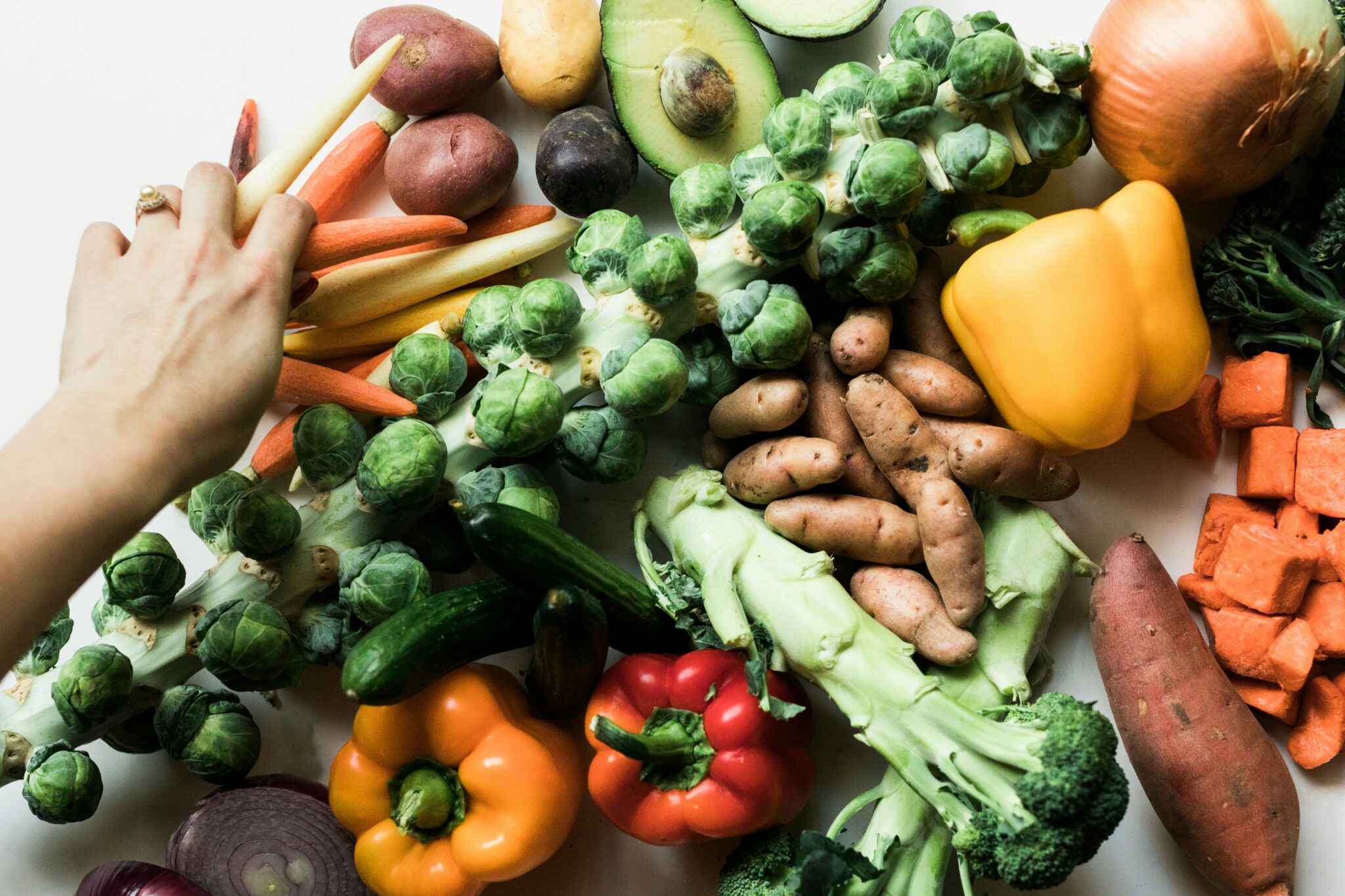
Photo courtesy of Nathan Dumlao, Unsplash