Alternative proteins are one way innovators are creating effective solutions to the climate crisis, global food insecurity, and biodiversity loss. Animal agriculture accounts for nearly a fifth of global emissions, with meat consumption projected to increase 50 percent by 2050, according to the United Nations (UN).
“I think advocacy around farm systems is critically important. I think alternative proteins… [are] an essential complement,” Bruce Friedrich tells Food Tank. Friedrich is the co-founder and president of The Good Food Institute (GFI), a nonprofit working to advance alternative protein innovation.
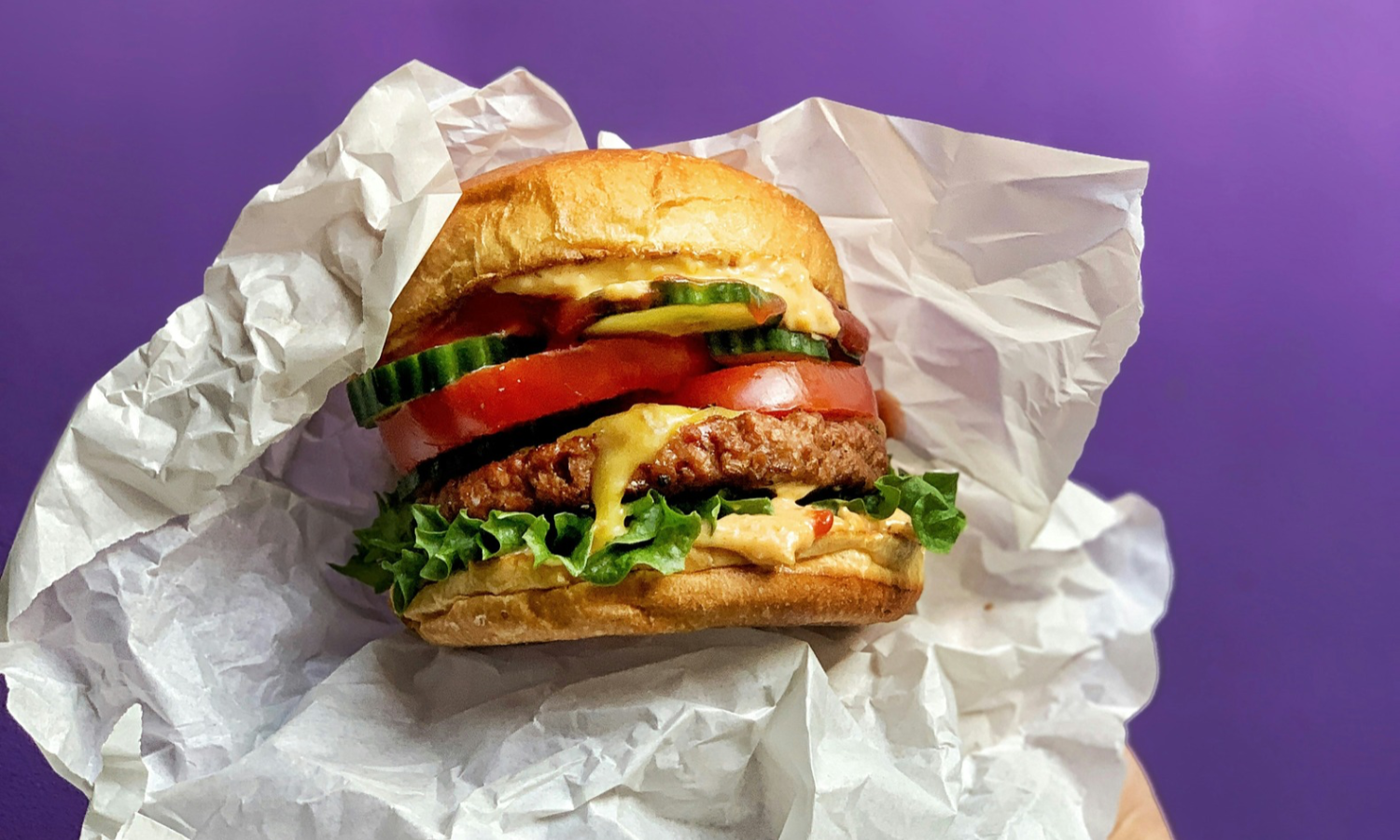
Plant-based, cultivated, and fermentation-derived products are all types of alternative proteins that aim to provide an environmentally friendly and higher-welfare substitute for traditional meat. Investment in the sector exploded in 2020 and reached a high of $US5.1 billion in 2021, before eventually dropping to $US881 million in 2025, according to GFI. While enthusiasm from the private sector has waned, Friedrich says that it has only increased for those working across climate, hunger and malnutrition, and global health. Governments, too, are seeing the value of investing in the technology, which is still relatively new, he adds.
“You’d be amazed by how much progress we have made just in the last five years in terms of scaling technology, starting to bring down the cost, and starting to make products that really taste good,” Rohan Shirwaiker tells Food Tank. Shirwaiker is the principal investigator and co-director of the Bezos Center for Sustainable Protein at NC State University, where he works on advancing sustainable protein technologies from the lab to practical applications.
Friedrich points out that the more than $US3 billion invested into cultivated meat has been spread across more than 100 companies over the span of a decade, with only a small portion dedicated to research and development. He says that the media has largely misrepresented the sector as a failure, but really, it’s just getting started.
Friedrich and Shirwaiker both agree that the industry needs to focus on taste and price parity for alternative proteins to appeal to consumers. “I think the sector started with an animal welfare and climate sustainability angle, which is important to many people, but at the end of the day, consumers don’t make their buying decisions based on that,” Shirwaiker says.
He mentions the possibility of using opportunity crops to improve products’ taste, texture, and nutritional quality. Opportunity crops are traditional and indigenous plants that are nutrient-rich, climate-resilient, and underutilized. They also provide the possibility to support smallholder farmers and encourage biodiversity, according to an article published in Nature Communications.
For small livestock producers and ranchers, the threat is not alternative protein, but rather large agribusinesses, Friedrich tells Food Tank. In fact, alternative protein may present them with an opportunity to shift to crop production for direct human consumption, with the support of government and policy. According to Friedrich, transforming land used for intensive animal agriculture to grow crops for direct human consumption, restore natural ecosystems, and increase regenerative agriculture can bring us closer to food self-sufficiency. “So, who better to be the stewards of that repurposing than farmers and ranchers,” he says.
Listen to the full conversation with Bruce Friedrich and Rohan Shirwaiker on “Food Talk with Dani Nierenberg” to hear more about the future of alternative protein in mitigating the environmental and climate crisis, developing and scaling technology to meet the needs of consumers, and ensuring that farmers and policymakers are part of the conversation.
Articles like the one you just read are made possible through the generosity of Food Tank members. Can we please count on you to be part of our growing movement? Become a member today by clicking here.
Photo courtesy of LikeMeat, Unsplash