
• Log In
  • Account
Food Tank

Join Food Tank

  • News
    • Sustainable Agriculture
    • Food Waste
    • Food Heroes
    • Urban Agriculture
    • Policy and Organizing
    • Food Tank Lists
    Inside My Ground-Truthing Notebook: Here in Kenya, Insects Are Success Stories
    Danielle Nierenberg
    1 week ago
    0
    Food Tank’s Weekly News Roundup: Farm Bankruptcies Climb, Nigeria Distributes Clean Cookstoves, Uganda Moves to Certify Agroecological Produce
    Elena Seeley
    2 weeks ago
    0
    Food Tank Explains: Regenerative Agriculture
    Jessica Levy
    3 weeks ago
    0
    Food Tank’s Weekly News Roundup: Development Aid Plummets, Rwanda Protects Farmland, Bangladesh Launches New Farmers’ Card
    Elena Seeley
    17 hours ago
    0
    On Stop Food Waste Day, We’re Celebrating the Power of Collective Action!
    Danielle Nierenberg
    2 days ago
    0
    Join Food Tank for the 10th Annual Stop Food Waste Day Celebration
    Elena Seeley
    2 weeks ago
    0
    Many bags and boxes of household goods and groceries spilling out of a garage and onto the driveway and sidewalk.
    ICE’s Impact on Food Security, as Seen Through Joyce Uptown Food Shelf
    Ella Deutchman
    1 month ago
    0
    Remembering Pedro A. Sánchez, Pioneering Soil Scientist and Champion of Sustainable Food Systems
    Jessica Levy
    January 23, 2026
    0
    To conclude Climate Week NYC, ten farmers from around the world took the stage to share deeply personal, moving, inspirational stories of resilient agriculture.
    ‘We Are The Environment’: For Farmers, Stories Of Regenerative Food Systems Are Deeply Personal
    Food Tank Editorial Team
    October 1, 2025
    0
    Food Tank’s Weekly News Roundup: Development Aid Plummets, Rwanda Protects Farmland, Bangladesh Launches New Farmers’ Card
    Elena Seeley
    17 hours ago
    0
    Inside Buffalo Go Green’s Approach to Food, Health, and Care
    Jessica Levy
    5 days ago
    0
    Food Tank’s Weekly News Roundup: The Future of Vertical Farming, Warming Temperatures Threaten Food Security, Côte d’Ivoire Invests in Women Farmers
    Elena Seeley
    3 weeks ago
    0
    Farm Bill Draft and Executive Order Fuel Debate Over Pesticide Regulations
    Jenna Gordon
    2 weeks ago
    0
    EU Food Waste Targets Are a Start—With Room to Grow
    Amy Hauer
    3 weeks ago
    0
    Food Tank’s Weekly News Roundup: The Next Farm Bill, Producers Stand Their Ground, and the Latest Progress on Deforestation
    Elena Seeley
    2 months ago
    0
    Spring Forward with these 20 Books on Food and Agriculture
    Elena Seeley
    4 weeks ago
    0
    Compilation of titles of the books described in the article.
    Food Tank’s Winter Book List: Reading to a Healthier Food System
    Skye Ellis
    February 3, 2026
    0
    126 Food and Agriculture Organizations to Watch in 2026
    Danielle Nierenberg
    December 29, 2025
    0
  • Working Groups
    • Academic Working Group
    • CSO Group
    • Refresh
  • Contact
  • About
  • Events
  • Arts
  • Donate
  • Join

Home » Plants » Collard Week Showcased the Varieties and History of Collards

Plants

Collard Week Showcased the Varieties and History of Collards

Allison Reser
December 22, 2020
0

Collard Week, a virtual event recently hosted by The Heirloom Collard Project and Culinary Breeding Network, explored the history, culture, cultivation, diversity, culinary possibilities, and seed saving techniques of collard greens. 

This was the first-ever Collard Week and it was part of a series of events, the 2020-21 Variety Showcase + Winter Vegetable Sagra. Speakers included Michael Twitty, author of The Cooking Gene, Ira Wallace, of Southern Exposure Seed Exchange, Jon Jackson, the founder of Comfort Farms, Amirah Mitchell, of Truelove Seeds, and Ashleigh Shanti, a chef in Asheville, NC. Each day of the event explored the significance and deliciousness of collards. 

Collards are a highly nutritious leafy green vegetable that have a significant role in African American history. Chris Smith, Co-Organizer of Collard Week and Executive Director of The Utopian Seed Project, tells Food Tank, “Enslaved people of West Africa readily adopted collards in place of the dark leafy greens they knew from their homeland, and in that way became a food of the African diaspora.” 

Smith hopes that Collard Week encourages more people to grow, eat, and talk about collards. Full recordings of the event are available on YouTube. 

Here are Food Tank’s five main takeaways from Collard Week.

1. Collards are very diverse.

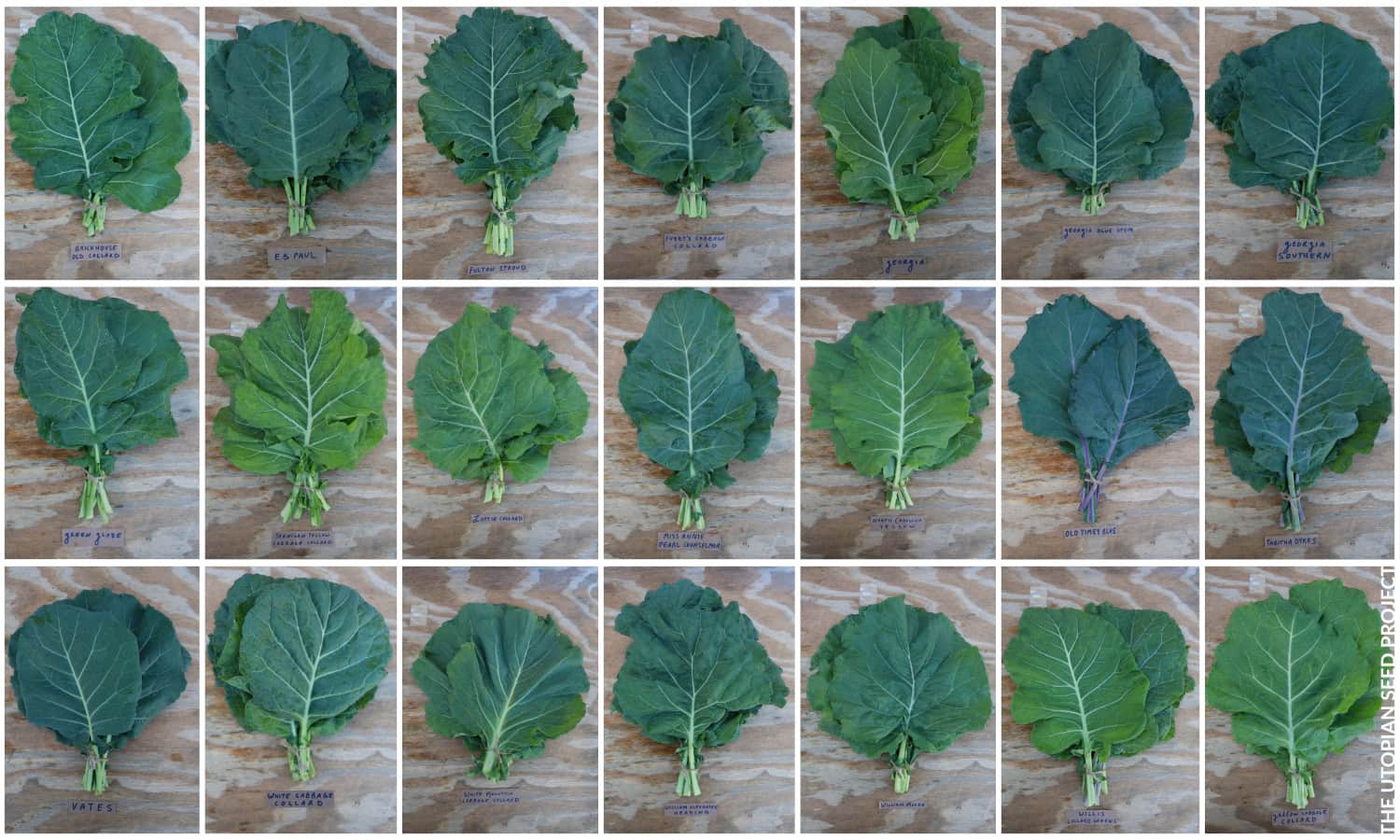
There are hundreds of varieties of collards. In her talk, Ira Wallace explained that the Georgia Southern or Champion varieties often appear in grocery stores. Less common varieties include Tabitha Dykes, Green Glaze, and North Carolina Yellow. Varieties differ in appearance, heartiness against weather conditions, and sweetness. Recently, the Heirloom Collard Project conducted the 2020 Collard Trial, which tasked more than 200 growers across the United States to produce 20 different varieties of collards. The trial helped growers collect and share data on the strengths of the varieties.  

2. Collard seeds have stories.

According to Amirah Mitchell, seed saving is the preservation of the genetics of a certain plant variety, but seed keeping is the collection of photos, recipes, family histories, and memories associated with the seed. On day two of Collard Week, Norah Hummel of Seed Savers Exchange and Nicolas Engelbert of SeedLinked discussed the importance of saving the stories of heirloom varieties of collards. For example, the story of the Ole Timey Blue variety of collard is preserved in a letter that the donor, Ralph Blackwell, included when he donated seeds to the Seed Savers Exchange in 1989; The letter details Blackwell’s family’s fondness for this variety and explains the way his mother grew it in the 1930s.

3. Collards were an important crop for enslaved Africans in the U.S., but it’s a myth that collards originated in Africa.

Michael Twitty shared that collards originated in Eurasia, and were brought to Africa by Portuguese settlers. The first Africans brought to Virginia through the slave trade were heavily influenced by the Portuguese and brought seeds, including collard seeds, with them. Enslaved Africans in the U.S. cultivated collards, which, Twitty says, were “superfood powerhouses” that filled nutritional gaps in their diets.

4. Collards taste better when harvested after the first frost. 

Jon Jackson said that he waits until after the first frost to try the varieties of collards he grows. Many of the other speakers at Collard Week agreed that collards thrive in cold weather and are sweeter if harvested after a frost. Their cold-weather heartiness and ability to provide nutrition all year round contributes to their cultural significance. 

5. Collards can be cooked or eaten raw. 

Although there are many ways to prepare collards, cooks often stew them in broth. But in a cooking demonstration, Chef Ashleigh Shanti explained that collards are also delicious when eaten raw. She suggested making a collard salad with chiffonade, or thinly sliced, collards, quick-pickled collard stems, fresh collard dressing, and collard chips. 

Photo courtesy of Chris Smith

Content like this article is only possible because of Food Tank members. Please join today and get exclusive member benefits at FoodTank.com/Join.

Tweet
Share
Share
Tags Collard Greens Collard Trial Collard Week Collards Comfort Farm Culinary Breeding Network Diet Michael Twitter Ole Timey Blue Seed Savers Exchange Seed-Saving SeedLinked Southern Exposure Seed Exchange The Cooking Gene The Heirloom Collard Project The Utopian Seed Project True Love Seeds Winter Vegetable Sagra
Allison Reser

Allison Reser (she/her/hers) is a food lover, outdoor enthusiast, and hater of single-use plastics. With an interdisciplinary B.S. in Ecosystem Science and Sustainability from Colorado State University, Allison’s niche is to bridge the gap between scientific fact and responsible actions that anyone can take to protect our natural resources. Her experience ranges from sustainability consulting in the entertainment industry, to being an Urban Park Ranger in New York City.

Previous Article
Greater Pittsburgh Food Action Plan Prioritizes Justice in the Food System
Next Article
Support Food Tank in the New Year by Becoming a Member Today
December 22, 2020
Food Talk with Dani Nierenberg
Join Food Tank
April 2026
Apr 25 2026

“FOOD 2050” at San Francisco Climate Week

San Francisco, CA
Apr 29 2026

Stop Food Waste Day 2026

Charlotte, NC
May 2026
May 04 - 08 2026

PTFI Bellagio Convening

May 05 - 06 2026

Google Food Lab

May 17 2026

Power Of The Plate Conference

San Diego, CA
June 2026
Jun 01 - 02 2026

Food is Medicine Conference (FIMCON)

Washington D.C.
No event found!

Related News

Agriculture
The Local Step that Changed an Entire Country’s Approach to Agroecology
Food Tank’s Weekly News Roundup
Food Tank’s Weekly News Roundup: Kenya Protects Seed Sharing, Australia Expands Right to Repair, and SF Takes on Ultra-Processed Foods
Growing Forward: Insights for Building Better Food and Agriculture Systems
How Culinary Medicine Could Transform Healthcare: Q&A with Dr. Timothy Harlan on Bringing the Kitchen into Medical Education
Climate Change
Op-Ed | From Comfort to Climate: Why What We Eat Matters for the Planet
Get To Know Us
  • Our Mission
  • Danielle Nierenberg
  • Partners
  • Board of Directors
  • Media
Get Involved
  • Become A Member
  • Upcoming Events + Webinars
  • Write For Us
  • Volunteer
  • Contact Us
  • Jobs
More About Food Tank
  • Board of Directors
  • Partners
  • Volunteer with Food Tank
  • WeCameToDance
  • Contact Us
Food Tank
  • #givehealthy
  • About Food Tank
  • Academic Working Group
  • Account
  • Advisory Group
  • Annual Food Tank NYC Summit and Gala Dinner
  • Board of Directors
  • Cart
  • Checkout
  • Chicago
  • Contact
  • CSO Group
  • Danielle Nierenberg
  • Donate
  • Donation History
  • Donation Recurring Billing Setup
  • Events
  • Events
  • Food Tank
  • Food Tank
  • Food Tank Live
  • Food Tank Live San Diego
  • Food Tank Summits & Live Events
  • Get Email Updates
  • Good Food Org Guide Submission
  • Jobs
  • Join Food Tank
  • Live Stream Email Notifications
  • Login
  • Media
  • Minneapolis
  • My account
  • Newsletter Sign Up
  • Partners
  • Podcast Guests
  • Privacy Policy
  • Refresh Working Group
  • Shop
  • Summit Application – DC
  • Summit Application – NYC
  • Summit Application – San Diego
  • Summit Application – Seattle
  • temp-form
  • Thank You For Donating To Food Tank
  • Thank You For Joining Food Tank
  • Volunteer
  • Waitlist Application
  • Write For Us
  • Your Food Tank Account

© 2013-2025 Food Tank. All rights reserved.

  • News
    • Sustainable Agriculture
    • Food Waste
    • Food Heroes
    • Urban Agriculture
    • Policy and Organizing
    • Food Tank Lists
  • Working Groups
    • Academic Working Group
    • CSO Group
    • Refresh
  • Contact
  • About
  • Events
  • Arts
  • Donate
  • Join
  • News
    • Sustainable Agriculture
    • Food Waste
    • Food Heroes
    • Urban Agriculture
    • Policy and Organizing
    • Food Tank Lists
  • Working Groups
    • Academic Working Group
    • CSO Group
    • Refresh
  • Contact
  • About
  • Events
  • Arts
  • Donate
  • Join
  • Lost Password Back ⟶
  • Login
  • Register
Lost Password?
Registration is disabled.