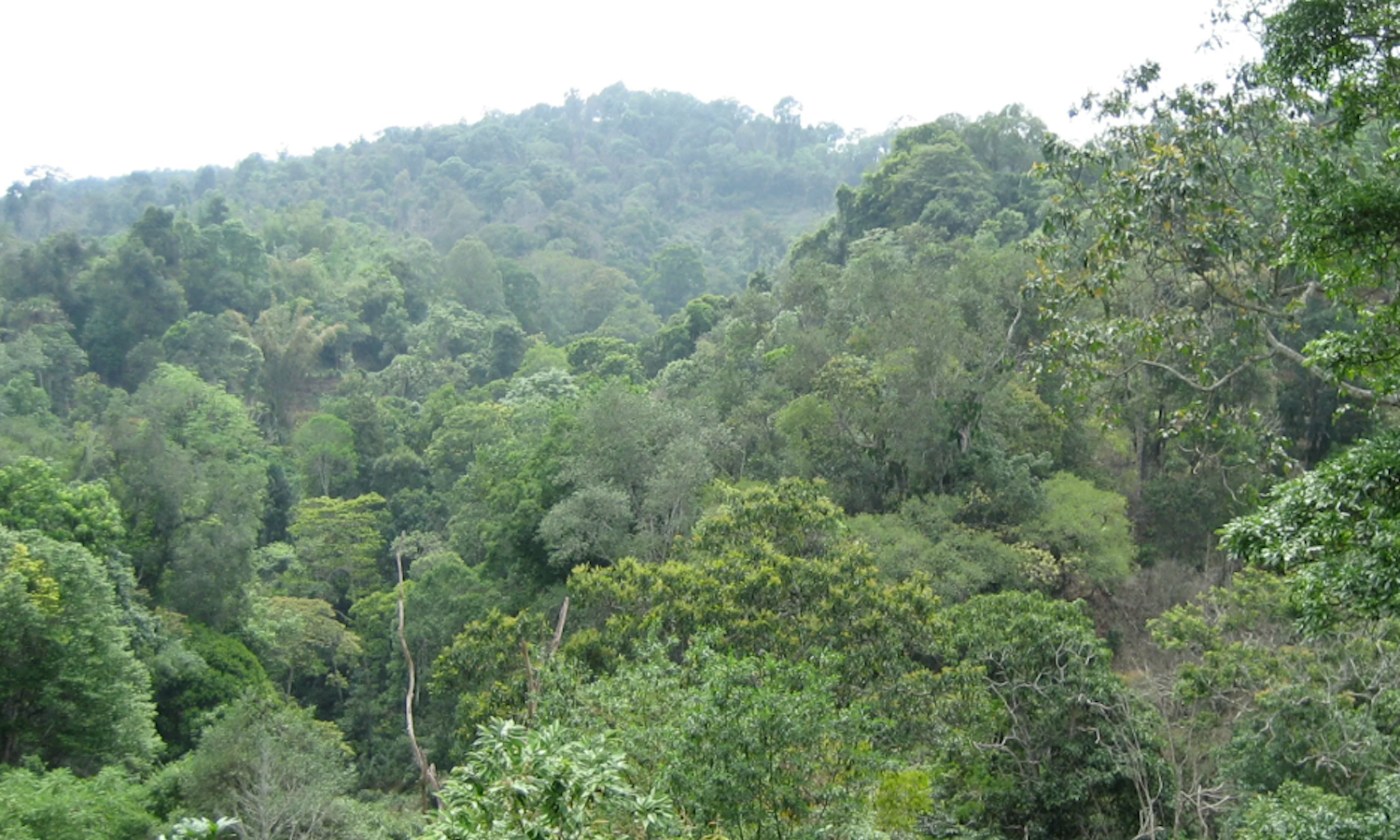
In montane regenerative agroforests of southwestern Yunnan, tea trees grow not in rows, but in relationship. Their trunks and branches are covered in fungi, moss, and orchids as they spread through a layered ecosystem of fruit trees and understory. Birdsong and harvest songs fill the air. Volatile aromatics deepen around us as we gather tender tea buds and glistening leaves, nibbling fruit along the way.
Later, steeping the tea, its bitterness softens into lingering notes of honey at the back of the throat. Twenty years ago, first drinking tea from an agroforest, I realized I was tasting the landscape itself. In that cup was the high elevation, the dance of sun and shade through tree canopy, the mist, the dark living soil, the mulch, the weeds, the pollinators, and the microbes that cover the leaves, all translated into flavor. It also carried the knowledge of the communities who had long stewarded these landscapes through generations of observation, experimentation, harvesting, selection, and care.
Montane Indigenous Akha communities shaped these landscapes within a mosaic of home gardens rich with herbs and vegetables, rice paddies with local landraces, forests filled with wild foods and medicines, orchards, grazing lands, and cultivated fields. These landscapes reflect an understanding of food through relationships across species, seasons, ecosystems, and communities.
What I learned in these communities became a wake-up call for how I understand food and the entire global food and agriculture system. Food revealed itself as ecological and biological exposure, a living translation of biodiversity, climate, soil, microbes, and culture into the molecules that shape flavor, nourishment, memory, and human health.
We experience food as biological exposure through tens of thousands of interacting molecules. Molecules in whole foods carry the memory of ecosystems, farming practices, and cultural histories. Sunlight is remembered in sugars, grasses in the tissues of grazing animals, and microbial communities in the transformation of milk and grain into new flavors and nutrients.
Many of the molecules we cherish for flavor and nourishment evolved first as protection. Bitterness and heat discourage grazing or being fully consumed. Phenolics shield against ultraviolet light. Terpenes summon allies when leaves are under attack. What we experience as aroma, heat, or astringency are the survival strategies of living systems, biochemistry shaped over millions of years to endure stress and change.
Tea plants produce catechins to defend themselves and terpenes to communicate in dynamic environments. These molecules vary with climate, elevation, and agricultural management such as regenerative agroforestry. Humans experience these ecological shifts through flavor, nourishment, memory, culture, and wellbeing. Food is landscape metabolized.
This translation is not limited to plants. High on the Tibetan Plateau in northwestern Yunnan, yaks translate the chemistry of alpine grasses and wildflowers into milk rich with protein and lipid molecules that carry the signature of place and season. Tibetan communities note the shift in milk and butter quality as they herd at higher elevations, with plants getting more bitter and medicinal. Along ancient trade routes, yak butter from alpine pastures was blended with fermented pu-erh tea, bringing together the chemistry of mountain grasslands and tea agroforests in a shared cup.
Along the Pacific coast where I look out today, halibut and rockfish carry the chemistry of kelp forests, smaller fish, and cold ocean upwelling in their tissues, with fats and proteins shaped through phytoplankton blooms and marine food webs.
Through fermentation, bacteria and fungi transform molecules, breaking apart proteins, fibers, and other compounds into forms that are often more digestible, bioavailable, flavorful, and biologically active. These preservation techniques are collaborations across species, with microbes reshaping foods into new flavors, nutrients, and therapeutic attributes.
Science now offers high-resolution tools to see the chemistry behind this ecological exchange and knowledge, but it has always been present, rooted in reciprocity and sensed experience.
Long before laboratories could name the molecules in food, our mouths could taste them.
The molecules of different foods meet within us, shaping our senses, our cells, and our connection to the living world. Molecules that help tea plants survive in agroforests can also help buffer inflammation in our bodies. Our microbiome, the unseen ecological community within, responds to these molecules and sends its own signals through the gut–brain axis, influencing mood, energy, and resilience.
Within our cells, mitochondria translate biomolecules into the energy of life. What began as the plant’s way of surviving, the animal’s way of metabolizing landscapes, and the microbe’s way of transforming matter has co-evolved with human knowledge and culture. Through cultivation, cooking, and fermentation, we learned to partner with these living processes, shaping food even as it shapes us.
We feel this most vividly in intact ecosystems. In regenerative orchards, the air carries the volatile molecules of ripening fruit. On the Tibetan Plateau, yak butter holds the chemistry of alpine herbs. In Montana meadows, wild huckleberries glisten with pigments that shield the fruit from ultraviolet light. Through aroma, texture, and taste, we trace rainfall, altitude, soil health, and stewardship.
To eat is to be in relationship with sun and soil, with farmers and foragers, with microbes and animals, with those before us and those yet to be. The molecules that become our cells once belonged to forests, fields, pastures, and oceans. For a time, we carry those living worlds within us.
We do not exist apart from the living world. Through food, through biology, and through care, we participate in the great reciprocity of life and remember that we belong.
This essay is part of Food Tank’s Flourish Series: Food and Health from Molecules to Systems, authored by Selena Ahmed, exploring how food connects us to the living world while asking what it means to flourish. For more in the series, click here.
Articles like the one you just read are made possible through the generosity of Food Tank members. Can we please count on you to be part of our growing movement? Become a member today by clicking here.
Photo courtesy of Selena Ahmed