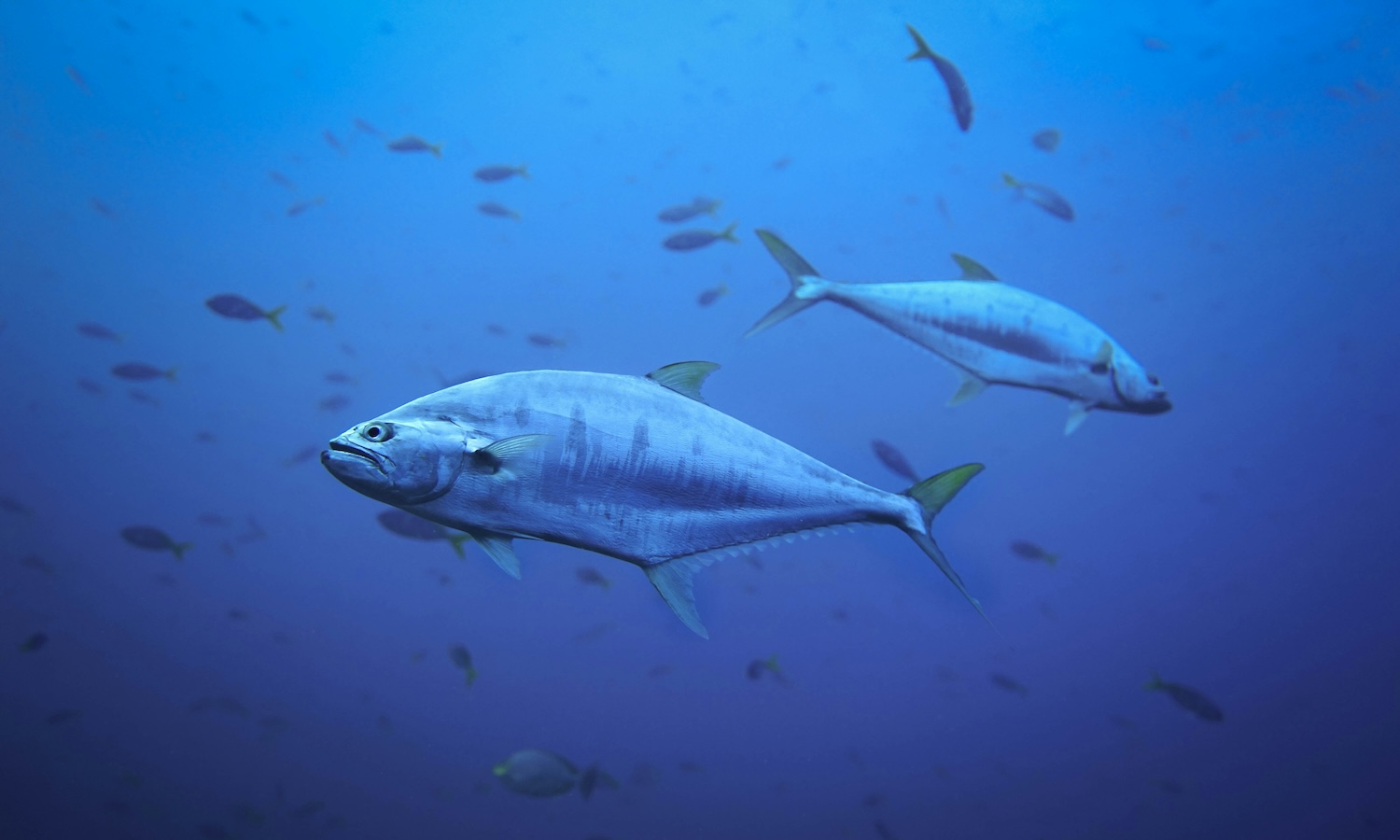
In Ecuador, TUNACONS is working to make the country’s offshore tuna fishing fleets more environmentally and socially sustainable. The organization is promoting responsible fishing practices that protect fish populations and preserve the long-term health of the ocean ecosystem.
Founded in 2015, TUNACONS emerged from a coalition of tuna industry leaders across Ecuador, Panama, and the United States. With the support of WWF Ecuador, the foundation launched its Fisheries Improvement Project (FIP) to advance science-based yield practices, implement technical training for industry professionals, and reduce the tuna industry’s environmental impact on marine ecosystems.
“The objective of the FIP was to help part of Ecuador’s purse seine tuna fishery resolve, in the short and midterm, the sustainability problems that were pending when we started in 2015,” Pablo Guerrero, Director of Marine Conservation for WWF Ecuador, tells Food Tank.
Ecuador is a major player in the global seafood market. According to the U.N. Food and Agriculture Organization (FAO), the country is the second-leading exporter of tuna behind Thailand, supplying largely to American, Japanese, and European markets.
Most of Ecuador’s tuna fishing fleet relies on purse seiners, large vessels that use wide, encircling nets to catch entire schools of tuna at once. While efficient, FAO reports that this method can result in bycatch, the accidental capture of non-target species like sea turtles, sharks, and juvenile fish. And abandoned nets can lead to ghost fishing, a phenomenon in which lost nets, traps, and fishing lines continue to catch and kill marine life long after they have been discarded.
A key tool in this type of fishing is the Fish Aggregating Device (FAD), a floating or anchored structure that imitates natural debris. It attracts schooling fish, making them easier to catch in bulk. Many industrial FADs are made from synthetic, non-biodegradable materials, which can contribute to ocean plastic pollution if they are lost at sea.
But through the ECOFADs program, TUNACONS is working to address marine pollution by manufacturing FADs produced entirely of biodegradable materials. In 2020, 20 percent of the TUNACONS fleet had already made the switch. By 2029, the rest will follow, as required by a recently adopted resolution from the Inter-American Tropical Tuna Commission for all fishing fleets operating in the eastern Pacific Ocean.
The FIP’s Observers on Board and Good Practices Program reduce bycatch by establishing reporting statistics to track progress, whether positive or negative. And the Program teaches fishers how to safely and effectively remove and release bycatch from purse seine nets.
TUNACONS’ purse seine fleet of 58 ships has 100 percent observer coverage. Guerrero explains that these observers document everything that happens on board, including how bycatch is handled and where it ends up. “The observers record whether or not best handling practices are applied, whether the bycatch returns to the water alive or dead,” he says.
To further reduce bycatch mortality, TUNACONS developed a best practices guide to safely remove large marine animals from purse seine nets. The foundation also partners with scientific satellite tagging programs to track sharks and manta rays after release, helping researchers determine survival rates when proper handling techniques are applied.
Last year, these efforts earned the TUNACONS fishery the Marine Stewardship Council (MSC) Blue label.
Articles like the one you just read are made possible through the generosity of Food Tank members. Can we please count on you to be part of our growing movement? Become a member today by clicking here.
Photo courtesy of James Thornton, Unsplash