Walk into any of the world’s great seed banks, and you will find one of humanity’s quietest triumphs.
Within carefully monitored facilities are millions of seeds, protected as a vital safeguard against war, climate change, disease, and loss. Governments, scientists, farmers, nonprofits, Indigenous communities, and others have spent decades building an extraordinary safety net for our food system.
This work is essential. But it is not enough.
Every time I stand in one of these collections, I find myself asking a singular question. It’s not, “Have we saved enough seeds?” Instead, it’s, “Who will carry these seeds forward?”
For decades, much of the conversation about agricultural biodiversity has centered on preservation. How many varieties have been collected? How many are safely stored? How many have been documented, cataloged, and protected?
These are important questions. But seeds have never saved themselves.
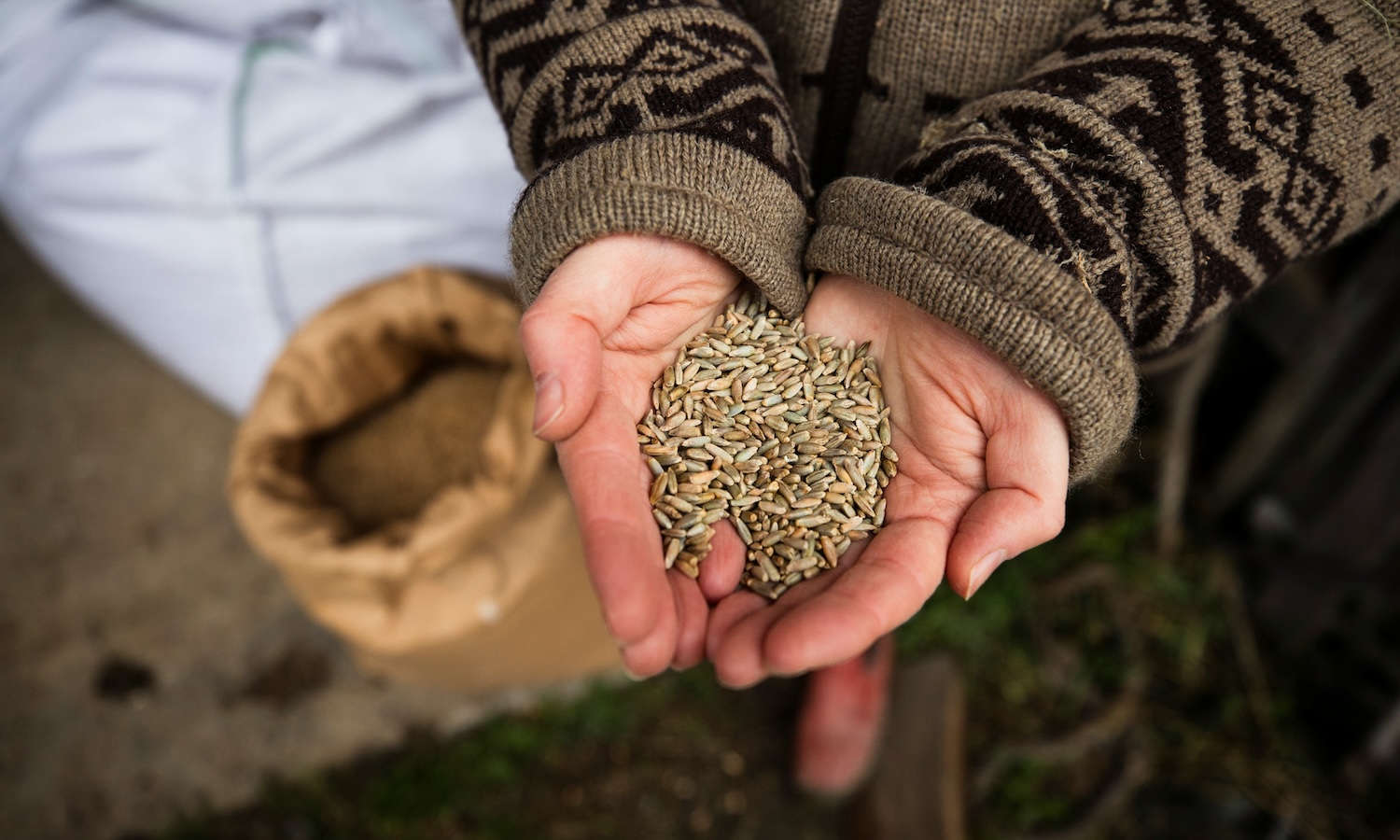
Every variety that still exists today survived because someone, somewhere, decided it was worth growing for one more season. Perhaps it produced through a drought. Perhaps it thrived in a mountain valley where little else would. Perhaps it made the best sauce, the sweetest pie, or the meal that brought a family together every August.
Long before there were professional plant breeders and modern gene banks, Indigenous peoples, and generations of farmers, gardeners, cooks, neighbors, and grandparents were making careful seed-saving choices year after year.
They selected the plants that performed well, tasted good, or held meaning for their communities. They saved those seeds and passed them on.
We often call these varieties “heirlooms,” a word that can make them sound like antiques. But heirlooms are not objects preserved behind glass. They are the result of continuous observation, adaptation, and innovation by dedicated people.
Every year someone selected the best of them. Every year someone decided they were worth saving again. That is not nostalgia. It is one of the longest-running experiments in human history.
Today, we rightly celebrate new agricultural technologies and advances in plant breeding. They can also help farmers respond to changing climates, emerging pests, disease, and shifting production needs.
But somewhere along the way, we began to assume that newer automatically means better.
Better for whom?
Better for shipping across a continent? Better for mechanical harvest? Better for shelf life? Sometimes the answer is yes. But what about flavor? What about local adaptation developed over generations by people who knew their land intimately? What about the bean a community continued to grow because nothing else matched its taste or cultural significance?
Those choices contain knowledge. And that knowledge ought to help guide the future of agriculture alongside the latest scientific breakthroughs.
Preserving this knowledge has always been a shared responsibility. Indigenous communities, farmers, gardeners, seed libraries, nonprofit organizations, public gene banks, and universities all serve as bridges between generations. They carry forward genetic material along with the stories, practices, relationships, and ways of understanding the land connected to it.
Much of this work happens quietly and with modest resources, even though it sits at the intersection of some of the defining challenges of our time: food security, climate resilience, biodiversity, and cultural survival.
We have invested in preserving seeds. We must also invest just as deliberately in the people who will keep them alive and useful.
It means creating opportunities for young farmers and gardeners to learn how to select, save, and share seeds. It means making collections more accessible to the communities and growers who can put them to use. And it means supporting the next generation of plant breeders and gene bank professionals.
It also means recognizing that chefs, seed companies, educators, and eaters have roles to play. When people choose diverse crops, ask where their food comes from, grow unfamiliar varieties, or support organizations maintaining public collections, they help create a future for those seeds.
Agricultural biodiversity is not something we simply store. It is something we participate in.
A seed may remain alive in a freezer for a century, but its fullest value is realized when someone plants it. When someone tastes it. When someone observes how it responds to a changing environment. When someone decides, among all the other options available, “This one is worth saving and growing again.”
That decision, repeated, is how diversity has always moved through history.
The most compelling question before us today is not whether we can preserve the biological diversity we have inherited. It is whether we can inspire enough people to see themselves as part of its future.
Every generation receives this extraordinary inheritance. No generation can claim it as its achievement alone. We borrow it from those who came before us, add our own chapter, and pass it along.
The future of crop diversity will not be decided by freezers, databases, or scientific breakthroughs alone. It will be decided by people—by what we choose to grow, eat, share, study, support, and save.
Who will carry the diversity forward?
The answer must be all of us.
Articles like the one you just read are made possible through the generosity of Food Tank members. Can we please count on you to be part of our growing movement? Become a member today by clicking here.
Photo courtesy of