Bee U NYC is using urban beekeeping to teach young people about food systems, biodiversity, and environmental careers, while fostering the next generation of pollinator stewards.
Bees, along with other pollinators, help reproduce 35 percent of the world’s food crops and nearly 75 percent of flowering plants, according to the U.S. Department of Agriculture. But the U.S. Fish and Wildlife Service reports that pollinators are under growing pressure from habitat loss, the climate crisis, pests, and pesticides. Bee U is raising awareness of these issues while supporting the broader ecosystem around pollinator research.
“Many young New Yorkers have limited opportunities to learn directly about pollination, biodiversity, urban agriculture, or where their food comes from,” André Ware, Executive Director and Co-Founder of Bee U NYC, tells Food Tank. “Through beekeeping, participants begin to see the connections among pollinators, plants, climate, food production, neighborhood green spaces, and environmental justice.”
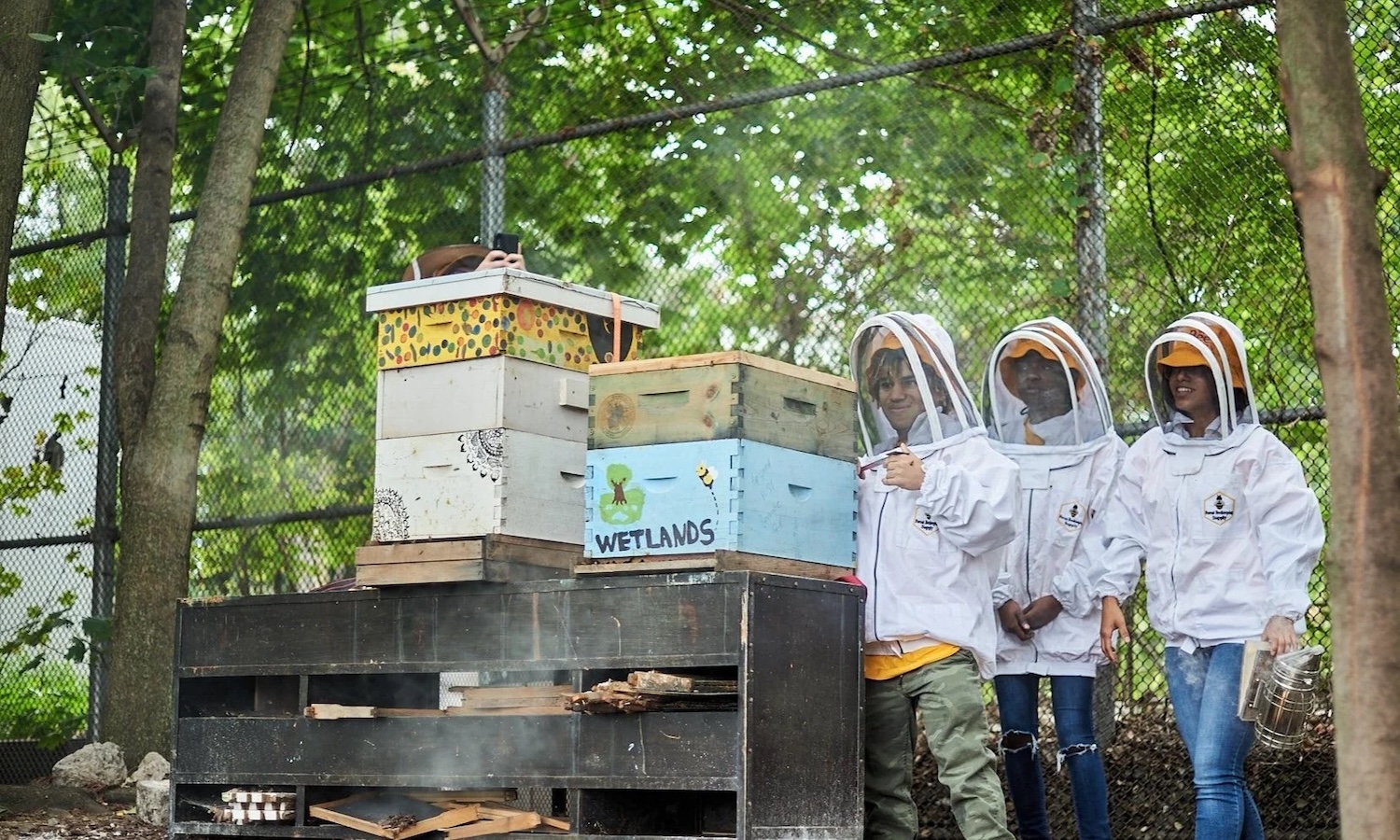
The organization’s paid Urban Beekeeping Fellowship teaches young people between the ages of 16 and 24 how to manage hives, identify pollinators, understand bee biology, and explore careers in sustainability and agriculture. This year, Bee U NYC accepted 46 Fellows, its largest class to date. Since 2021, nearly 100 young people have completed the program.
“We believe that a more sustainable food system requires a more inclusive workforce,” Ware says. “It is not enough to teach young people about environmental challenges. They need paid opportunities to build skills, develop professional networks, and imagine themselves as future environmental leaders and scientists.”
The program also builds community partnerships. Fellows learn in local community gardens, urban farms, cultural institutions, and neighborhood organizations instead of traditional classrooms. These experiences connect pollinator health with food production, environmental justice, and local history.
The organization’s work comes at a time when public investment in agricultural research faces growing uncertainty. Following the closure of the U.S. Department of Agriculture’s century-old Beltsville Bee Lab, food systems researchers like Dr. Jennie Durant, a food systems researcher at UC Davis and former USDA fellow, warned that the loss of research capacity and technical expertise could weaken support for farmers and reduce crop yields over time.
Programs like Bee U NYC can translate science into action by educating future beekeepers, supporting pollinator stewardship, and building stronger connections between communities, the environment, and local food systems. Their work helps ensure that research does not stay in laboratories but reaches the people who will shape the future of agriculture.
Ware says pollinator education must extend beyond honeybees. “Supporting pollinator health also means understanding the science behind native pollinators, planting diverse forage, harmful pesticide practices, and managing urban hives responsibly,” he tells Food Tank.
As bee populations continue to face new challenges like rising temperatures and loss of habitat, Bee U believes that education may become one of the most valuable conservation tools.
Articles like the one you just read are made possible through the generosity of Food Tank members. Can we please count on you to be part of our growing movement? Become a member today by clicking here.
Photo courtesy of Bee U