
The International Maize and Wheat Improvement Center (CIMMYT) and the Borlaug Institute for South Asia (BISA) recently launched the Atlas of Climate Adaptation in South Asian Agriculture (ACASA) to support climate-informed decision-making in the region’s agriculture sector.
Created in collaboration with the national agriculture research systems (NARS) in India, Bangladesh, Nepal, and Sri Lanka, the Atlas provides insights on climate risks and vulnerability for agriculture in these countries and identifies suitable adaptation measures.
“Engagement with NARS across has been central to generating and validating data on climate risks and adaptation options, ensuring that the Atlas is scientifically robust, locally relevant, and firmly grounded in regional expertise,” Pramod Aggarwal, the Principal Investigator behind ACASA and Regional Program Leader for South Asia at BISA, tells Food Tank.
ACASA’s detailed maps show village-level climate risk data for 15 crops and six livestock species. Climate risks include heat and cold stress, untimely rainfall, water deficit, and high temperatures, among others.
The goal is to support policymakers, researchers, insurers, private sector leaders, and development actors “by enabling high-resolution visualization of climate risks and adaptation options down to the sub-district level,” Aggarwal explains.
“With Sri Lanka’s journey towards climate-smart agriculture, recent evidence highlights the need for a comprehensive assessment of location-specific climate actions to bridge knowledge gaps within the country,” says Dr. W.A.R.T. Wickramaarachchi, Director General of Sri Lanka’s Department of Agriculture.
According to Aggarwal, the applications are abundant. Governments can use the data to determine where investment is needed to mitigate risk. Donors can identify high-impact locations and inform funding for climate smart agriculture. And banks can design women-focused credit solutions.
In the past two decades, more than half of all South Asians were affected by a climate-related disaster, according to the World Bank Group.
Aggarwal explains that increasing rainfall variability leads to short-duration floods, which damage crops, and longer dry spells that harm soils. Heat stress affects yields of staple crops including rice and wheat, while cyclones and storm surges are threatening coastal farming systems through crop loss and soil salinization.
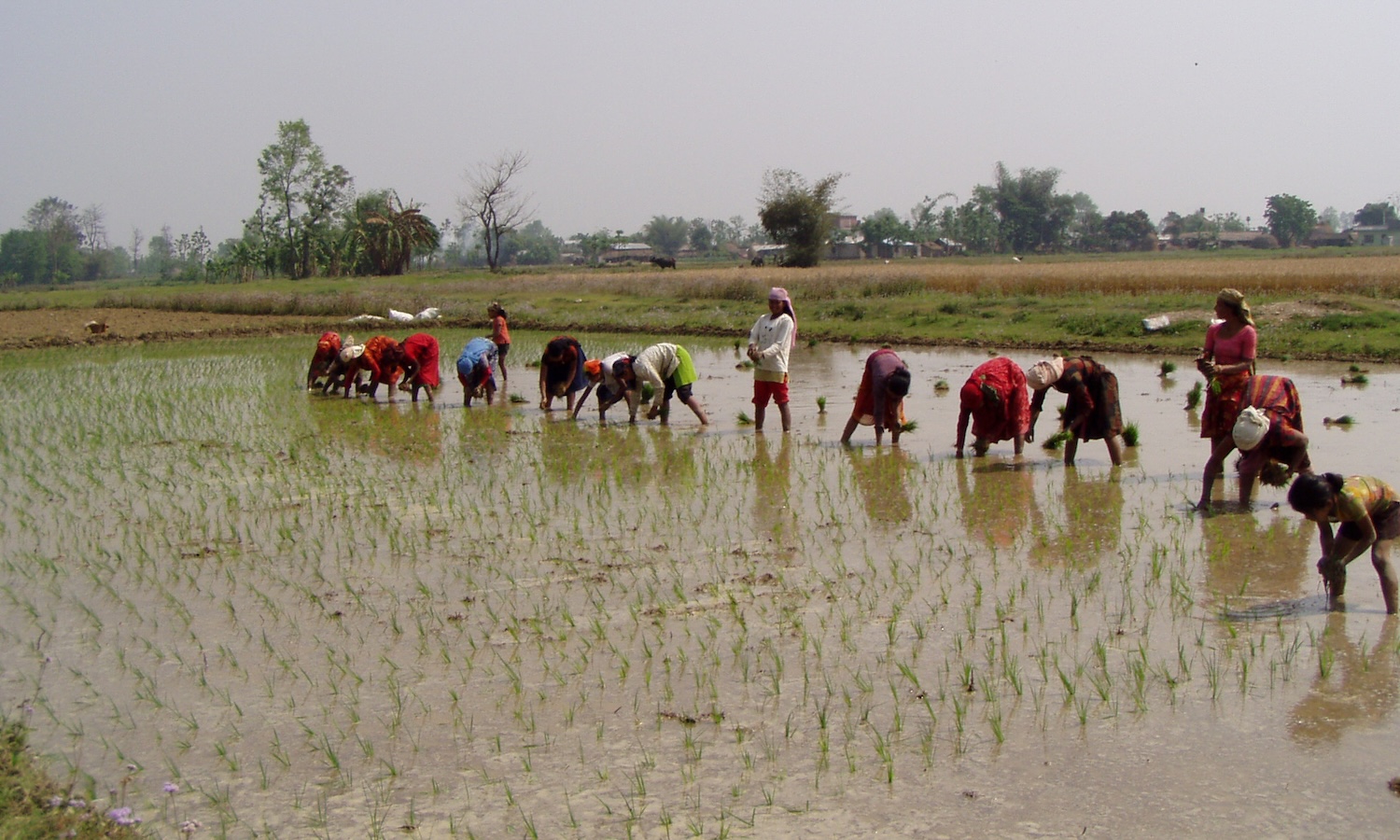
“These climate events are especially challenging for smallholders, who have limited access to irrigation, insurance, and timely climate information, making their livelihoods highly vulnerable to climate shocks,” Aggarwal tells Food Tank.
Articles like the one you just read are made possible through the generosity of Food Tank members. Can we please count on you to be part of our growing movement? Become a member today by clicking here.
Photo courtesy of Sigismund von Dobschütz, Wikimedia Commons