Earlier this year, the House passed a Farm Bill packed with giveaways to Big Agriculture. Rather than confronting the environmental, public health, and economic harms of industrial agriculture, lawmakers doubled down on the status quo—protecting powerful agribusiness interests while falling short on meaningful investments in sustainable farming, conservation, and rural communities.
Unfortunately, the recent Senate draft doesn’t do much better. As senators debate their version of the Farm Bill, they face a fundamental question—will federal farm policy continue subsidizing and entrenching the factory farm model, or will it help build a healthier, more resilient food system?
That question is especially urgent with the emergence of a new generation of technologies that promises to solve the problems of industrial livestock production. Chief among them are genetically engineered animals.
Instead of addressing the overcrowding, disease, pollution, and animal suffering that factory farms create, biotechnology companies are redesigning animals to better tolerate those conditions. The message is clear: don’t fix the system—change the animals.
A new Friends of the Earth report, Engineering Harm: Why Genetically Engineered Animals Deepen Risks to Public Health and Animal Welfare, documents how this approach is moving rapidly from the laboratory into the food system. Since 2020, federal regulators have approved three genetically engineered animals for human consumption, including cattle engineered to better tolerate heat and pigs engineered to resist disease.
Supporters present these genetically engineered animals as innovative solutions to agricultural challenges. In reality, they represent a troubling extension of the same industrial model that created many of those challenges in the first place.
Consider cattle engineered for heat tolerance, which are being promoted as a response to rising temperatures, even as industrial livestock production remains a major contributor to the climate crisis.
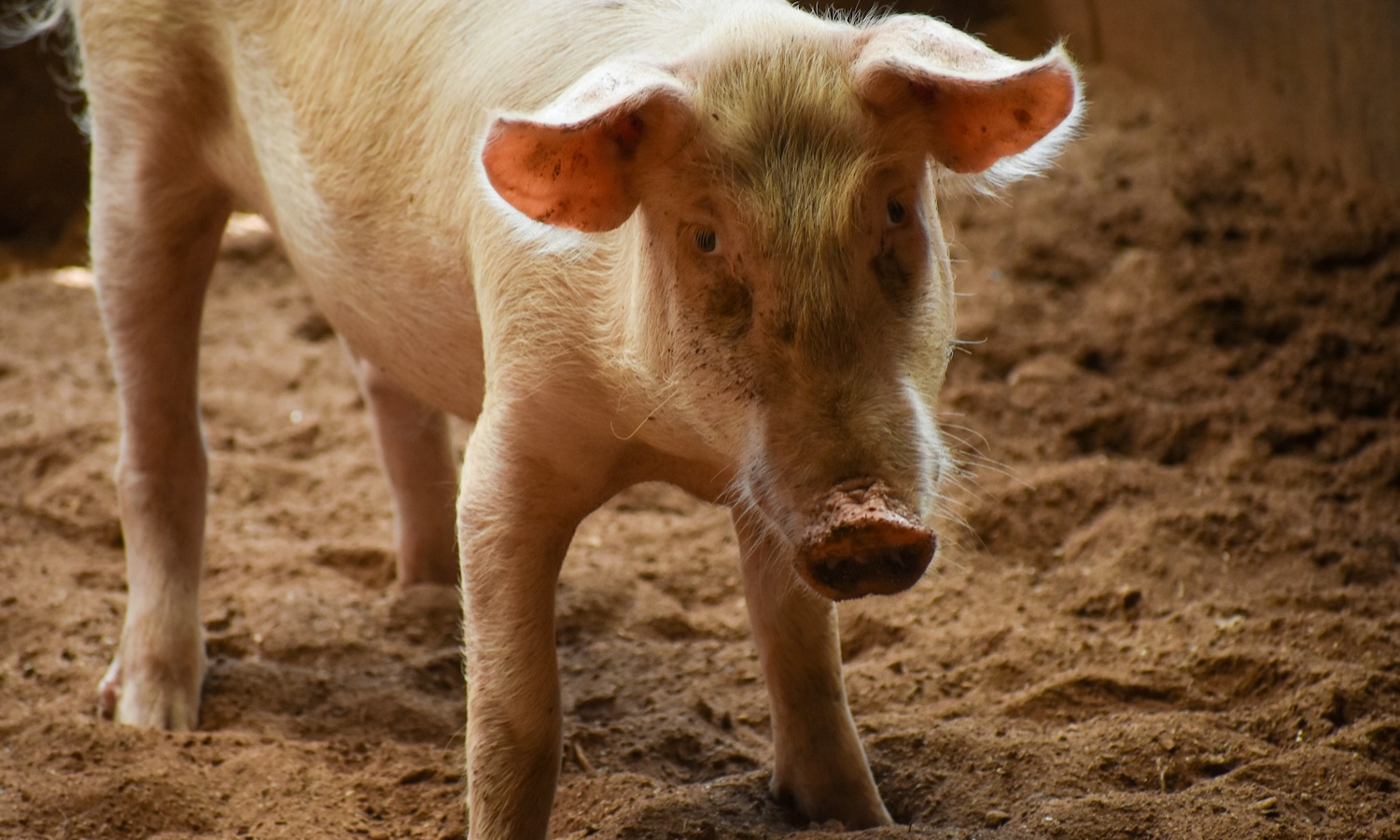
Likewise, disease-resistant pigs. Porcine reproductive and respiratory syndrome (PRRS) costs the pork industry hundreds of millions of dollars annually, largely because the virus spreads rapidly in the crowded conditions typical of industrial operations. Rather than reducing animal density or improving living conditions, the industry is engineering pigs to withstand the disease.
At the same time, corporate interests have doubled down on their efforts to advance the so-called Save our Bacon Act in the Farm Bill, which would overturn state animal welfare laws designed to move away from the extreme confinement of pigs and other farm animals. And the stakes extend beyond animal welfare—it would also undermine states’ authority to establish stronger agricultural production standards that protect public health, the environment, and local communities. Though this harmful provision wasn’t included in the base text of the Senate Farm Bill, industry allies are expected to continue pushing to include it as the legislative process moves forward.
For decades, federal farm policy has helped prop up industrial animal agriculture through commodity subsidies, crop insurance programs, and policies that favor large-scale production. Taxpayer dollars already support a system linked to water pollution, antibiotic overuse, greenhouse gas emissions, and the hollowing out of rural communities. Genetically engineered livestock threaten to make things even worse by helping factory farms adapt and expand without addressing the conditions that make them harmful in the first place.
And genetically engineered animals raise serious concerns of their own.
Creating these animals often involves cloning and other invasive procedures with high failure rates. Friends of the Earth finds that thousands of cloned embryos used in the development of the genetically engineered GalSafe pig resulted in only a handful of successful animals. Mortality rates among genetically engineered piglets were significantly higher than in conventional pigs. In other cases, animals developed abnormalities or died during the development process.
Scientists have also documented unintended genetic changes associated with engineering animals, including mutations that can affect animal health and welfare. Despite industry claims of precision, the results of gene-editing technologies are often not predictable, and the long-term consequences remain poorly understood.
The public health risks deserve equal scrutiny. One genetically engineered pig approved for sale contains an antibiotic-resistance marker gene, raising concerns about the potential spread of antibiotic resistance—one of the most pressing public health challenges of our time. Disease-resistant animals may also create evolutionary pressures that encourage viruses to evolve in unexpected ways. Yet federal regulators have largely brushed aside these concerns.
Perhaps most troubling is how little independent oversight exists. The U.S. Food and Drug Administration relies heavily on data generated by the companies seeking approval. Public access to safety data is limited. Independent scientific review is often absent. In some cases, regulators have exempted genetically engineered animals from full approval processes altogether.
This should concern anyone who cares about food safety, scientific integrity, or democratic accountability.
The Senate’s Farm Bill debate offers a chance to begin charting a different course.
Instead of helping factory farms become more efficient at producing disease, pollution, and animal suffering, lawmakers should invest in farming systems that already provide proven benefits for public health, animal welfare, and the environment. Congress could expand support for well-managed pasture-based livestock systems, organic agriculture, regional food infrastructure, conservation programs, and farmer transition assistance. It could strengthen local processing capacity, improve animal welfare standards, and reduce dependence on routine antibiotics. And it must reject the Save Our Bacon Act and any effort to strip local communities and states of their authority to set strong agricultural production standards.
These approaches do not require redesigning animals to fit factory farms. They require redesigning farming systems to work with animals, people, and ecosystems.
Articles like the one you just read are made possible through the generosity of Food Tank members. Can we please count on you to be part of our growing movement? Become a member today by clicking here.
Photo courtesy of Yaw Ansu-Kyeremeh, Unsplash