For Paula Swaner Sargetakis, co-owner of Frog Bench Farms in Salt Lake City, Utah, farming began with curiosity. She grew up on her family’s ranch, spending countless hours exploring the natural world. The first time she saw tree frogs, she recalls falling in love with the animals and collecting them in a bucket with leaves, rocks, and water to take home.
“There were no frogs left in the pot by the time we got home, because there was no lid on the pot,” says Sargetakis, joking that “we did have to get rid of that car.” Experiences like this, and generations of family gardeners before her, planted the seeds for what would become a career in farming.
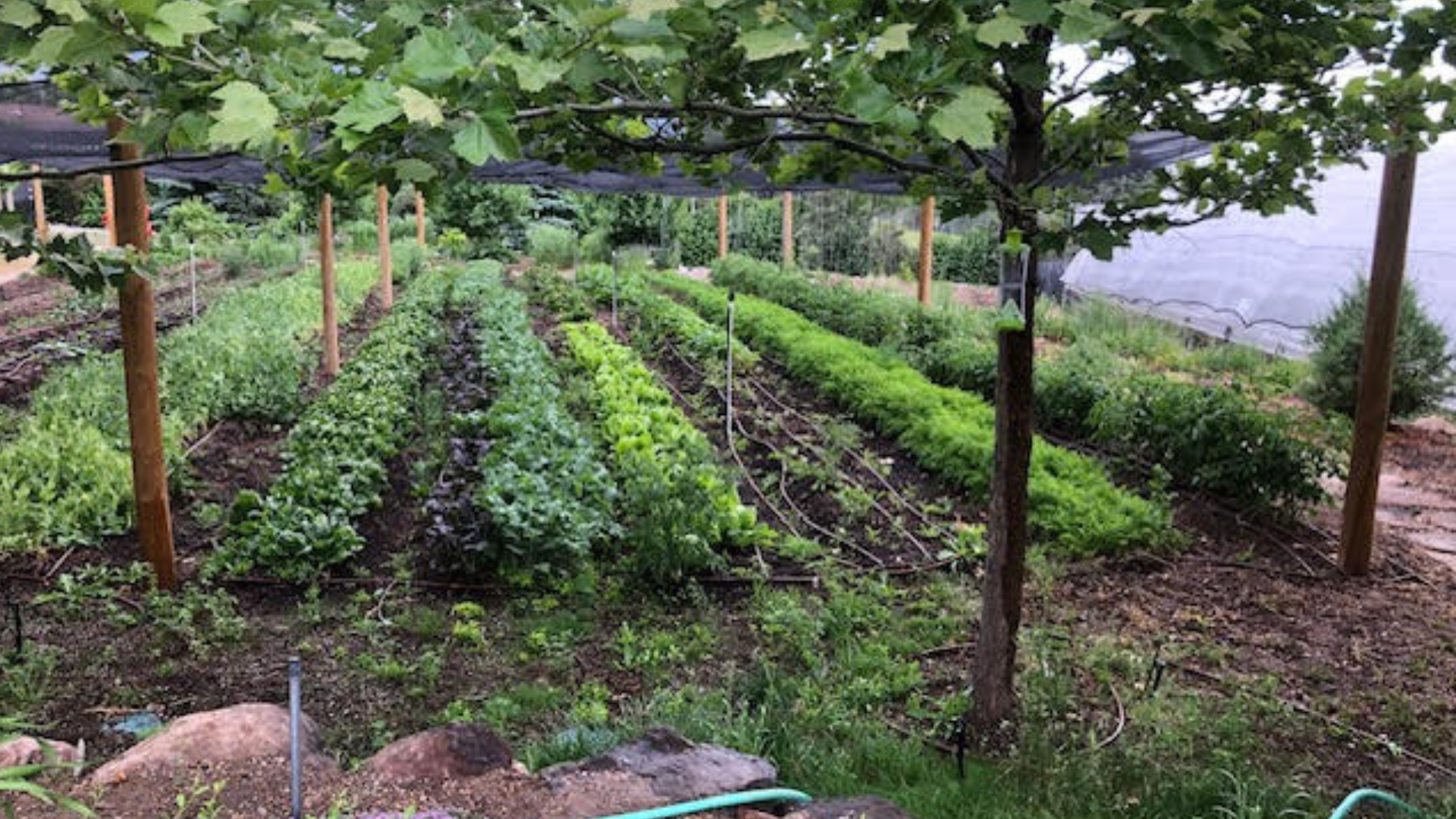
Today, Sargetakis and her husband co-own Frog Bench Farms—a name inspired in part by her lifelong love of frogs. Using regenerative practices adapted to an urban setting, the small, 1.5-acre farm grows produce for local markets, community programs, and 22 restaurants in the Salt Lake City area.
When Sargetakis and her husband searched for land to build a farm, they looked near schools, knowing they wanted their farm to also serve as a classroom to teach students where their food comes from.
“They’re always surprised that there’s a farm right next door,” says Sargetakis. “But there’s joy in it, and they will ask questions, and they learn.”
When children visit, they are sometimes very nervous to taste unfamiliar vegetables like microgreens, she adds. But like in her own childhood, curiosity usually wins, “and most of them like it.”
Alongside education, reducing waste is central to Sargetakis’s work at Frog Bench Farms: “Everything we grow on site, we don’t waste anything.”
The farm donates surplus produce to the University of Utah’s student pantry and the Utah Food Bank. Crops that aren’t sold fresh are made into teas and other value-added products, while visitors learn how to preserve food using affordable tools available at local hardware stores.
That philosophy reflects Sargetakis’ broader understanding of sustainability—not simply protecting natural resources but strengthening local food systems and sharing knowledge. At the farm, she collects water, sources ingredients locally for value-added products whenever possible, and continually looks for ways to keep resources circulating within the community.
Running a small farm, however, comes with difficult financial realities. Frog Bench Farms is committed to paying employees a living wage, even though doing so adds another layer of economic pressure to an already challenging business.
“You don’t make money farming, you make it in other sides of the product,” says Sargetakis.
Sargetakis says diversification, education, and community partnerships make it possible to continue farming while staying true to the farm’s values. Ultimately, though, she hopes more people come to understand what farming truly requires, and why it matters.
“I’m hoping one day… [that] people understand and appreciate the hard work that goes into farming and how much fun we have doing it,” says Sargetakis.
On a small urban farm surrounded by classrooms and city streets, Sargetakis aims to show that agriculture doesn’t need large acreage to make a lasting impact. For her, all it takes is an acre and a half, a handful of curious students, and someone willing to keep getting their hands in the dirt.
This article is part of Food Tank’s ongoing Farmer Friday series, produced in partnership with Niman Ranch, a champion for independent U.S. family farmers. The series highlights the stories of farmers working toward a more sustainable, equitable food system. Niman Ranch partners with over 500 small-scale U.S. family farmers and is committed to preserving rural agricultural communities and their way of life.
Articles like the one you just read are made possible through the generosity of Food Tank members. Can we please count on you to be part of our growing movement? Become a member today by clicking here.
Photo courtesy of Paula Swaner Sargetakis