

Food Tank had the opportunity to talk with BCFN Alumni Sujardin Syarifuddin about why it’s important that youth are active participants in shaping the future of global food systems.
Food Tank

Mailee Walker on Food Leaders: “We can truly be a considered a movement to be reckoned with”
Executive Director of the Claneil Foundation, Mailee Walker seeks to connect complimentary voices and elevate the power of small actions to make big differences in community health.

Jessie Bovay: “We need to teach young people food literacy”
Jessie Bovay, Director of Business Development at Mercaris: “The solutions to food insecurity and access will come from worldwide collaboration”

Jill Isenbarger: “Encourage people to eat in harmony with regional ecosystems”
CEO of Stone Barns, Jill Isenbarger is connecting these leaders in the food system to strengthen communities and advocate for the environment.

Duffield: Crop “Yield does not tell the whole story”
Duffield and is integrating livestock into crop rotations and helps aspiring and transitioning farmers by drawing on more than 20 years of farming experience and a background in teaching.

The Sound Food Uprising: A Movement to Reimagine Food in the Puget Sound
The Beecher’s Foundation is launching a ten-year consumer education campaign to reimagine the food system of the Puget Sound, the metropolitan region surrounding Seattle that is home to nearly four million people. Called the Sound Food Uprising, the campaign plans to teach one million eaters to challenge the way food is manufactured and deceptively marketed.

Lynsi Burton: On Writing, Food Policy, and a Meat-Free Lifestyle
Lynsi Burton opens up about a meat-free lifestyle, food waste, and food policies that can help build a better food system.

The Airfield Estate: “Ireland produces some of the best food in the world”
The Airfield Estate uses its century-old charitable heritage to inspire new change in the way visitors see food and the sources it comes from

Amber Lambke: Returning to our Roots Through Grains
Amber Lambke, President of Maine Grains, Inc., talks about returning to Maine’s grain producing history to strengthen local farmers and the economy.

33 Food and Agriculture Organizations Building a Better Food System in Washington, D.C.
With the 4th Annual Washington, D.C. Food Tank Summit just around the corner, Food Tank is highlighting 33 organizations working to build a better food system in the Washington, D.C. area.

True Cost Accounting Can Positively Impact All Facets of U.S. Food System
Long-time organic farmer, Anne Schwartz talks about True Cost Accounting, and the positive social and environmental implications of integrating local, organic, and small-farms into food system policy.

Op-Ed: The Future of Food
The food system cannot sustain prolonged impacts from climate change and unchecked population growth. Professor Sayed Azam-Ali shares his insights about creating a sustainable future for food through the generation of a long-lasting, nutritional food source.

Turning a Restaurant Into a Social Movement: A Conversation with Dan Simons of Founding Farmers
Dan Simons of Founding Farmers talks about the importance of responsible, sustainable practices in his business and why supporting independent farmers should matter to everyone.

Peter Rabbit on Food Waste: “Better Ate Than Never”
The star of the upcoming animated movie “Peter Rabbit” urges viewers, “Just don’t waste it,” in a Save The Food campaign public service announcement.

Liz Whitehurst on How to Better Connect Food Systems and People
Owl’s Nest farmer and D.C. Food Summit speaker Liz Whitehurst shares her advice on ways that we can all become more connected to our local food systems and each other through community supported agriculture and cooking.

Jeremiah Lowery: “Food Insecurity Was a Recurring Theme in my Life”
Highlighting personal experience, Lowery encourages an intersectional approach to food policy and understanding of current food issues in the D.C. area.

M.J. Altman: Food Security “Brings All People Together”
M.J. Altman, Editorial Director at World Food Program USA, talks about her background, her work, and her vision for reducing hunger and food waste around the globe.

Farmer Fridays: Scott Sibbel on Sustainable and Humane Farm Practices
Scott Sibbel, a Niman Ranch farmer, tells how sustainable, traditional, and humane farming techniques are transforming the U.S. food system.

Mara Fleishman: “Moving the Needle on School Food”
Mara Fleishman, CEO of the Chef Ann Foundation, tells Food Tank about her inspiration, her work helping schools adopt cook-from-scratch programming, and her vision for the future of school food in America.

How to Meet Rice Demand more Adequately, Equitably, and Sustainably
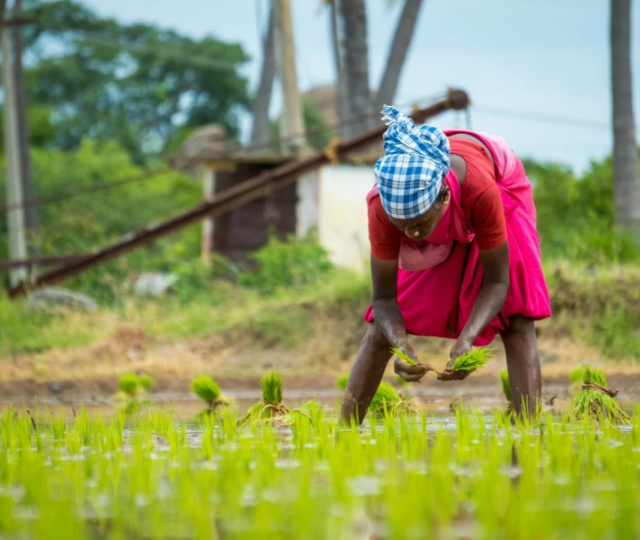
SRI can reduce water requirements, increase land productivity, and buffer against the impacts of climate change while reducing reliance on artificial inputs, like pesticides and artificial fertilizer.